
Golden Triangle Tour: Explore Delhi, Agra and Jaipur, India
Discover India's famous Golden Triangle Tour covering Delhi, Agra and Jaipur. Explore the iconic Taj Mahal, India Gate and the beautiful Hawa Mahal while experiencing India's rich history, culture, architecture and traditions. This popular travel route offers an unforgettable journey through three remarkable destinations.
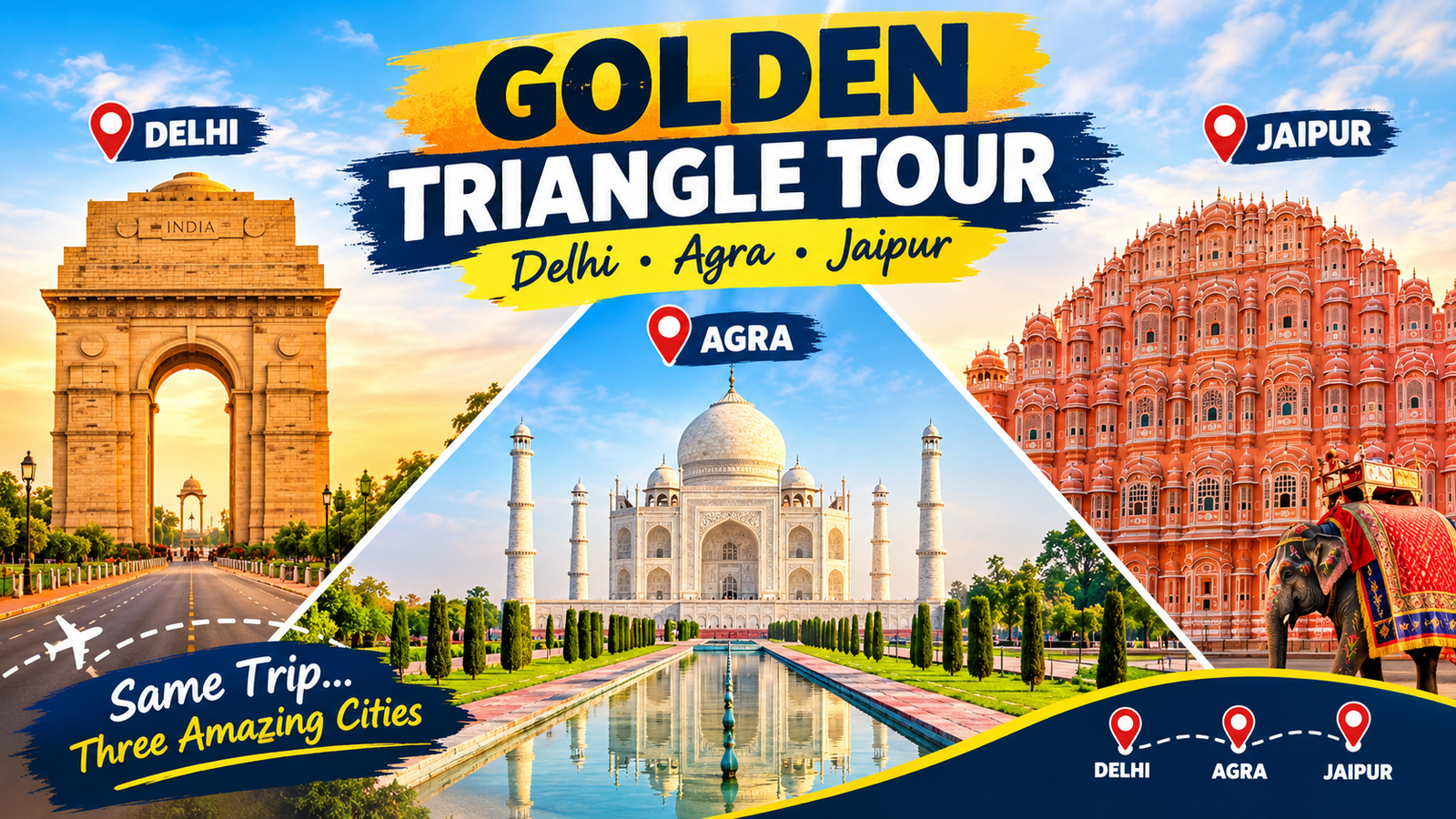
Golden Triangle Tour India 2026: Complete Travel Guide to Delhi, Agra and Jaipur
The Golden Triangle Tour India 2026 is one of the most popular and memorable travel experiences for visitors who want to discover the history, culture, architecture and traditions of India. This famous tourist circuit connects three remarkable cities, Delhi, Agra and Jaipur, each offering a unique glimpse into the country's glorious past and vibrant present. From the magnificent historical monuments of India's capital to the timeless beauty of the Taj Mahal and the royal palaces of Rajasthan, the Golden Triangle Tour brings together some of the country's most celebrated destinations in one unforgettable journey.
Whether you are an international tourist visiting India for the first time, a family planning a cultural holiday, a couple looking for a memorable getaway or a history enthusiast interested in India's architectural heritage, this journey offers something for everyone. Travellers can explore ancient forts, magnificent palaces, traditional markets, historical gardens, colourful streets and famous religious landmarks while experiencing the diversity of Indian food, hospitality and local traditions. A well-planned Golden Triangle itinerary also allows visitors to understand how the history and culture of Delhi, Agra and Jaipur differ from one another while remaining connected through centuries of trade, architecture and royal heritage.
What Is the Golden Triangle Tour in India?
The Golden Triangle Tour is a famous travel circuit that connects Delhi in the north, Agra in Uttar Pradesh and Jaipur in Rajasthan. These three destinations form a roughly triangular pattern on the map, which is how the route received its popular name. Each city has its own identity, architectural style, historical significance and cultural experiences, making the complete journey more diverse than a holiday focused on a single destination.
Delhi introduces travellers to a combination of ancient monuments, Mughal architecture, lively markets and modern urban attractions. Agra is internationally recognised for the Taj Mahal and its remarkable Mughal heritage, while Jaipur is celebrated for its grand forts, royal palaces, pink-coloured historic architecture and traditional Rajasthani culture. Together, these destinations provide an accessible introduction to the history and diversity of northern India.
Many travellers complete the Golden Triangle Tour in approximately five to seven days, although the duration can be adjusted according to personal interests, transport arrangements and available holiday time. The complete road circuit can cover roughly 700–750 kilometres, depending on the selected routes, starting point, hotel locations and additional sightseeing stops.
1. Delhi – Explore the Historic Capital of India
Delhi is a common starting point for the Golden Triangle Tour because it offers extensive air, railway and road connections with other parts of India. The city is a fascinating destination where historical landmarks stand alongside modern buildings, busy shopping districts, museums, restaurants and cultural centres. Its streets reflect different periods of Indian history, from ancient settlements and medieval kingdoms to the Mughal era and modern India.
One of the most recognisable landmarks is India Gate, a major memorial surrounded by an attractive public area. Travellers can also visit the Red Fort, a magnificent historical complex associated with the Mughal period, and Qutub Minar, an impressive tower known for its detailed architectural design. Humayun's Tomb is another important attraction, admired for its gardens, symmetrical layout and influence on later Mughal architecture.
Visitors who want to experience the city's traditional atmosphere can explore Old Delhi, particularly the historic streets and markets around Chandni Chowk and Jama Masjid. These areas provide opportunities to discover local food, traditional shops, textiles and everyday city life. Travellers interested in modern Delhi can also explore shopping centres, museums, galleries and popular restaurants.
A full day is useful for visiting several of Delhi's major attractions, while two days may be more suitable for travellers who prefer a relaxed schedule. Planning the route carefully is important because attractions are spread across different parts of the city, and traffic can affect sightseeing time.
2. Agra – Discover the Timeless Beauty of the Taj Mahal
Agra is one of the most important destinations on the Golden Triangle Tour and is particularly famous for the magnificent Taj Mahal. This internationally recognised monument was commissioned by Mughal emperor Shah Jahan in memory of his wife Mumtaz Mahal. Built primarily from white marble, the Taj Mahal is admired for its balanced design, detailed decorative work, beautiful gardens and distinctive domed structure.
For many visitors, seeing the Taj Mahal in person is the highlight of their trip to India. The monument changes in appearance with the light, making early morning a popular time for sightseeing. Travellers should check official opening hours, ticket arrangements and visitor instructions before their visit. The Taj Mahal is closed for regular tourist visits on Fridays, so the day must be considered while planning the overall Golden Triangle itinerary.
Agra offers several other important historical attractions beyond the Taj Mahal. Agra Fort is a remarkable fortified complex featuring historic courtyards, palaces and buildings associated with the Mughal rulers. It provides valuable insight into the political and architectural history of the region. Itimad-ud-Daulah's Tomb is another notable monument, admired for its decorative marble work and intricate details. Mehtab Bagh is also popular among visitors who want to enjoy views of the Taj Mahal from across the Yamuna River.
Travellers with additional time can include Fatehpur Sikri, a historic city associated with Emperor Akbar, in their itinerary. Agra is also known for handicrafts, marble-inlay products, traditional sweets and regional food. Spending a full day in the city allows visitors to experience the main monuments without rushing through every attraction.
3. Jaipur – Experience the Royal Heritage of the Pink City
Jaipur, the capital of Rajasthan, is the third major destination on the Golden Triangle Tour. Commonly known as the Pink City, Jaipur is famous for its historic architecture, royal palaces, imposing forts, colourful bazaars and distinctive Rajasthani culture. The city provides a different experience from Delhi and Agra, with its historic streets, traditional crafts and strong connection to Rajasthan's royal history.
Hawa Mahal is among Jaipur's most recognisable landmarks. Its elaborate façade, distinctive windows and intricate design make it one of the city's most photographed buildings. Amber Fort is another major attraction, known for its hilltop setting, impressive courtyards, decorative rooms and historic architecture. Visitors should allow enough time to explore the fort rather than trying to fit too many locations into a short visit.
City Palace offers another opportunity to discover Jaipur's royal heritage through its courtyards, buildings and collections. Jantar Mantar, a historic astronomical observatory, is an important attraction for visitors interested in science and architecture. Nahargarh Fort is also popular with travellers seeking elevated views of the surrounding city.
Jaipur's markets are an essential part of the travel experience. Visitors can explore traditional textiles, jewellery, handicrafts, pottery and locally produced souvenirs. Rajasthani cuisine is equally memorable, with regional specialities offering a taste of the state's culinary traditions. One or two days in Jaipur can cover many major attractions, although additional time allows for a slower and more detailed exploration.
What Is the Distance of the Golden Triangle Tour in India?
The total distance of the Golden Triangle Tour depends on the selected route, the location of your accommodation and any additional destinations included in the itinerary. The commonly travelled road distances between the three main cities are approximately:
Delhi to Agra: 230–240 kilometres by road.
Agra to Jaipur: Approximately 230–250 kilometres by road.
Jaipur to Delhi: Approximately 270–290 kilometres by road.
These figures are useful for initial planning rather than exact navigation measurements. The actual distance can change depending on the starting point, destination address, highway selected and local sightseeing stops. Travellers should check a current navigation service before departure to estimate the most suitable route.
The Delhi-to-Agra journey is commonly made using the Yamuna Expressway. Agra and Jaipur can be connected by road, with Fatehpur Sikri sometimes added as a sightseeing stop. Travellers usually return to Delhi from Jaipur by road or choose an appropriate train service according to their departure arrangements.
How Many Days Are Needed for the Golden Triangle Tour?
A five-to-seven-day trip is a practical choice for visitors who want to experience the main attractions of all three destinations. However, the ideal duration depends on how many monuments you want to visit, whether you enjoy exploring local markets and how much time you prefer to spend travelling between cities.
A three-day itinerary is possible, but sightseeing will be rushed and several attractions may need to be skipped. A five-day holiday can cover the highlights of Delhi, Agra and Jaipur with careful planning, while a seven-day itinerary offers more flexibility for museums, local experiences, shopping and additional historical sites.
Suggested Seven-Day Golden Triangle Tour Itinerary
Day 1 – Arrival in Delhi
Arrive in Delhi, settle into your accommodation and explore nearby attractions according to your arrival time. Enjoy a local meal and prepare for the sightseeing planned for the following day.
Day 2 – Discover Delhi's Famous Attractions
Explore selected landmarks such as India Gate, Qutub Minar, Humayun's Tomb and the historic areas of Old Delhi. Adjust the schedule according to traffic, opening hours and your interests.
Day 3 – Travel from Delhi to Agra
Travel to Agra by car, taxi or train. After arrival, visit Agra Fort if time permits and explore the local food scene or markets.
Day 4 – Visit the Taj Mahal
Visit the Taj Mahal early in the morning when the monument is open to visitors. Explore additional attractions such as Itimad-ud-Daulah's Tomb or Mehtab Bagh, then plan your onward journey according to your chosen itinerary.
Day 5 – Travel from Agra to Jaipur
Travel towards Jaipur by road or another suitable transport option. Travellers with sufficient time may consider including Fatehpur Sikri after checking opening arrangements and the time required for the journey.
Day 6 – Explore Jaipur
Visit Hawa Mahal, Amber Fort, City Palace and Jantar Mantar according to your schedule. Reserve time for traditional markets, Rajasthani cuisine and local cultural experiences.
Day 7 – Departure
Enjoy breakfast and any remaining sightseeing before departing from Jaipur or continuing to another destination. Travellers returning to Delhi should allow sufficient time for the journey and their onward transport.
What Is the Best Time to Visit the Golden Triangle Tour?
October to March is generally a popular period for travelling around Delhi, Agra and Jaipur because daytime temperatures are often more comfortable for outdoor sightseeing. Winter mornings may bring fog, particularly around Delhi and Agra, which can affect road visibility and some train journeys.
Summer can be very hot in all three destinations, so travellers visiting during warmer months should plan outdoor activities for the cooler parts of the day, carry drinking water and schedule regular breaks. Weather conditions can vary each year, so checking local forecasts before departure is recommended.
Travellers planning a visit during festivals or major holidays should also consider accommodation availability, local traffic and transport demand. Booking important travel arrangements in advance can make the journey easier to manage.
Is a Car or Train Better for the Golden Triangle Tour?
Both cars and trains can be convenient options, and the right choice depends on your budget, travel preferences and sightseeing plans.
Choose a Car or Private Taxi If
You want flexible departure times and sightseeing stops.
You are travelling with family or carrying several bags.
You prefer direct transport between your accommodation and attractions.
You want to visit places located outside the main city centres.
You prefer to adjust your daily schedule according to your interests.
Choose a Train If
You want to avoid traffic on intercity journeys.
You prefer travelling between cities by railway.
You want to compare ticket prices and different service options.
You are comfortable arranging local transport after arrival.
You prefer to plan your journey around fixed departure times.
Some travellers combine trains between cities with local taxis for sightseeing. Before making reservations, compare departure stations, arrival stations, journey times, fares and the distance from the station to your hotel.
Frequently Asked Questions About Golden Triangle Tour India 2026
1. What is the Golden Triangle Tour in India?
The Golden Triangle Tour is a popular travel circuit connecting Delhi, Agra and Jaipur. It is known for its historic monuments, architectural landmarks, royal heritage, traditional markets and cultural experiences.
2. What is the total distance of the Golden Triangle Tour?
The complete road circuit is approximately 700–750 kilometres, depending on the selected routes, starting point, accommodation locations and additional sightseeing stops.
3. How many days are enough for the Golden Triangle Tour?
Five to seven days is a practical duration for exploring the major attractions of Delhi, Agra and Jaipur. A longer holiday provides more time for local markets, museums and additional historical sites.
4. Which city should I visit first?
Delhi is a common starting point because of its extensive transport connections. However, the route can be arranged differently according to your arrival airport, accommodation bookings and departure schedule.
5. Is the Taj Mahal included in the Golden Triangle Tour?
Yes. The Taj Mahal in Agra is one of the principal attractions of the Golden Triangle Tour, alongside Delhi's historical landmarks and Jaipur's famous forts and palaces.
6. Can I complete the Golden Triangle Tour in three days?
A three-day visit is possible, but the schedule will be demanding. You will need to prioritise major attractions and allow adequate time for road or rail journeys.
7. What is the best month to visit the Golden Triangle?
October to March is generally popular because the weather is often more comfortable for sightseeing. Always check current weather forecasts and local conditions before travelling.
8. Is the Golden Triangle Tour suitable for families?
Yes. Families can enjoy the monuments, museums, markets and cultural experiences in all three cities. A comfortable schedule with sufficient rest breaks can make the journey more enjoyable.
9. Can I visit Fatehpur Sikri during this tour?
Yes. Fatehpur Sikri can be included between Agra and Jaipur or visited from Agra, depending on available time and transport arrangements. Confirm current opening information before planning the stop.
10. Is the Golden Triangle Tour worth visiting in 2026?
The Golden Triangle is an excellent option for travellers interested in India's architecture, history, food and cultural diversity. With careful planning, it provides an introduction to three distinctive destinations within one trip.
11. Is a private taxi necessary for the Golden Triangle Tour?
No. A private taxi is not essential. Travellers can use trains, buses, taxis and other local transport options. The best choice depends on budget, convenience and the number of attractions planned.
12. What should I pack for the Golden Triangle Tour?
Pack comfortable walking shoes, weather-appropriate clothing, identification documents and any personal travel essentials. Keep tickets and booking confirmations accessible, and check current visitor rules for the monuments you plan to visit.
Final Travel Recommendation for Golden Triangle Tour India 2026
The Golden Triangle Tour India 2026 offers a rewarding opportunity to discover the historic capital of Delhi, the architectural beauty of Agra and the royal heritage of Jaipur. Each city contributes something different to the journey, from ancient monuments and cultural landmarks to magnificent palaces, traditional crafts and memorable local food.
For a comfortable experience, consider a five-to-seven-day itinerary, confirm your transport arrangements and check the opening days of important monuments before finalising your schedule. Allow enough time for travel between destinations instead of filling every day with sightseeing. With thoughtful planning, the Golden Triangle Tour can become a memorable journey through some of India's most celebrated historical and cultural destinations.
Suggested Tour: 4-Days-Golden-Triangle